
MyGrowth: Daily Micro Learning
Extramile LimitedEducation
4.2176.00 Reviews
- Version
- 1.13.1
- Installs
- 100.00K
- Age Rating
- Everyone
Screenshots
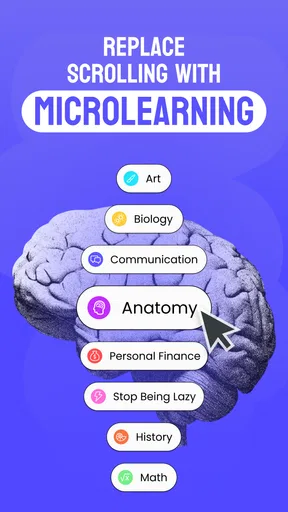
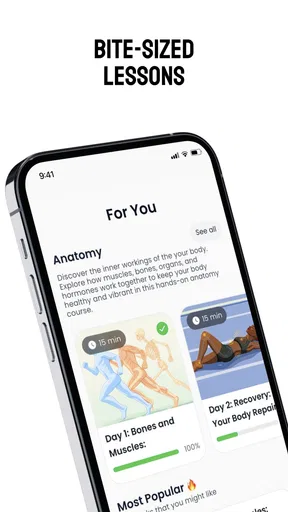
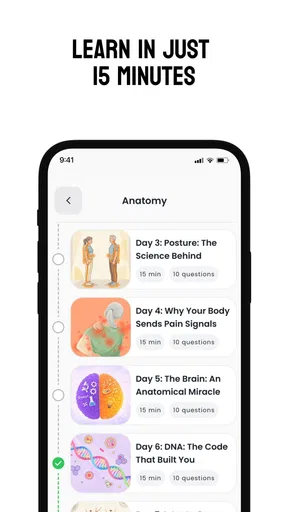
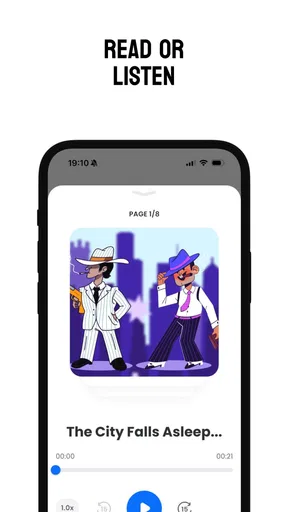

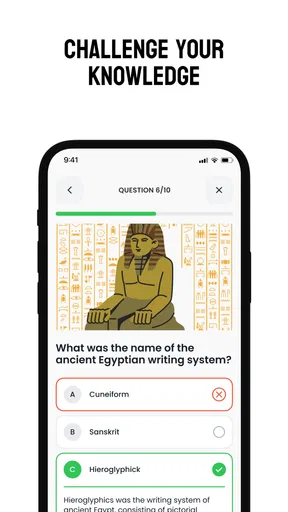
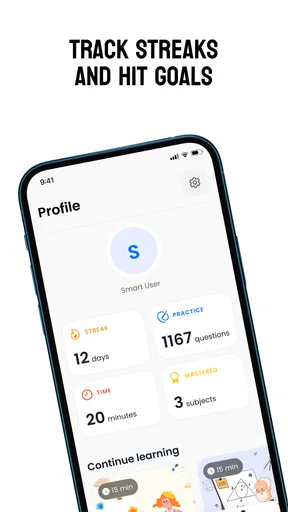
Our Review of MyGrowth: Daily Micro Learning
 Analysis by Appyee
I tried MyGrowth: Daily Micro Learning with one question in mind: does a bite-sized education app remain useful once the first-week novelty wears off? My initial impression was positive. It is an adult-focused learning app from Extramile Limited, built around short daily sessions rather than long courses or demanding study plans. That makes it easy to approach when I have a few spare minutes, but it also raises an important question: can small pieces of knowledge become a lasting habit instead of another notification I eventually ignore?
MyGrowth is free to start, available for Everyone, and listed for Android devices running version 10 or later. It has reached over 100K installs and holds a 4.2 average from around 2K ratings, which suggests that the basic idea connects with a reasonable number of learners. I would not treat those figures as proof that it suits every study style, though. The real value depends on whether you enjoy guided, lightweight learning more than deep lessons, textbooks, podcasts, or structured courses.
How MyGrowth feels after the first week
The first attraction is the low commitment. I do not need to clear an evening or prepare a notebook before opening the app. A short learning moment can fit between ordinary tasks: while waiting for a meeting, during a coffee break, or before putting the phone down at night. That simplicity is more important than it sounds. Many education apps lose me before the lesson begins because they ask me to choose a course, set a target, assess my level, and make several decisions. MyGrowth’s microlearning approach makes the starting point feel lighter.
During the first few days, the format creates a pleasant sense of progress. A compact lesson is easier to finish than a full chapter, and finishing something gives me a reason to return. The app’s store summary describes daily knowledge for adults, and that focus comes through in the overall positioning: this is not presented as a school replacement or a professional qualification platform. I see it more as a way to keep curiosity active when I have limited time and attention.
That distinction matters when deciding what to expect. If I want to master a language, prepare for an examination, or build a technical skill from beginner level to advanced competence, I would not rely on this app alone. Short learning units can introduce ideas and keep them fresh, but they rarely provide the depth, practice, feedback, and sustained projects required for serious mastery. MyGrowth works better as a daily learning layer than as my entire education system.
One useful first-week habit is to open it at the same point in an existing routine rather than treating it as a separate project. I found that attaching a short session to breakfast or the end of a workday is more reliable than promising myself I will “find time later.” The app benefits from regularity, and regularity is easier when the trigger already exists. This is a small but important difference between enjoying the concept and actually using it.
I also recommend resisting the temptation to rush through every available learning moment. The short format can encourage collecting completed sessions instead of absorbing them. After a lesson, I get more value if I pause and ask myself where the idea could apply in real life. For example, if a session introduces a communication principle, I can look for it in my next conversation. If it presents a general knowledge topic, I can explain it to someone else. That extra step turns passive scrolling into a modest act of retrieval.
For a busy adult, this is where the app makes its strongest early case. It does not demand the identity of a dedicated student. I can use it even during a week when work, family, or travel has disrupted everything else. The trade-off is that the compact format may feel too light for anyone who wants a substantial lesson every time. The first-week appeal is therefore real, but it is built on convenience rather than intensity.
Who gets the most from the small-session format?
I think MyGrowth is especially suitable for people who like learning broadly but struggle to maintain long courses. It can also suit someone returning to education after a long break, because the daily commitment feels less intimidating than a large curriculum. Adults who enjoy general knowledge, personal development topics, and short explanations may find it easy to fit into an existing routine.
A realistic use case would be a commuter who has ten quiet minutes before work. Instead of opening social media automatically, that person can complete a short learning session and then make a quick note of the one idea worth remembering. The same approach works for a parent waiting outside an activity, a freelancer between appointments, or a retiree who wants a regular mental exercise without enrolling in a formal class.
I would be more cautious about recommending it to learners who need a visible syllabus, detailed progress tracking, graded exercises, or a recognized outcome. Those users may be better served by a specialist course platform, a language program, or a book supported by deliberate revision. MyGrowth’s appeal is flexibility, and flexibility often means giving up some of the structure that serious learners depend on.
What remains useful from month to month
The second month is the real test. Almost any daily app can feel rewarding while it is new, especially when the sessions are short and the interface reduces friction. Long-term value depends on whether the lessons continue to give me a reason to return when the novelty has gone. In MyGrowth’s case, the answer is likely to vary according to how I define progress.
If I expect measurable expertise, I may become disappointed. Microlearning is naturally good at exposure: it gives me concepts, facts, prompts, and small pieces of context. Exposure is valuable, but it is not the same as durable knowledge. Without review, application, or discussion, some lessons will blur together. I would use the app alongside a personal note system or a deeper resource when a subject matters to me.
If I define progress as keeping a learning habit alive, the picture is stronger. A short daily session can prevent long gaps between moments of curiosity. That recurring contact has practical value even when each individual lesson feels modest. I may not remember every detail, but I can become more comfortable exploring unfamiliar subjects and more likely to recognize useful ideas elsewhere.
My preferred monthly workflow would be selective rather than automatic. I would complete the daily material, then mark or write down only the ideas that deserve a second look. At the end of each week, I could choose one topic to explore through a longer article, a book, a lecture, or a conversation. This prevents the app from becoming a closed loop where I consume small lessons without developing any of them.
That workflow also reveals one of the app’s less obvious trade-offs. Its convenience can make learning feel complete before it actually is. Finishing a short item produces closure, but understanding often requires discomfort: recalling the idea without help, comparing it with another explanation, or using it in a real situation. MyGrowth can start that process, but I need to supply the second stage. Readers who are willing to do that will probably find more lasting value than those who only chase completion.
The app is free, although it includes optional in-app purchases ranging from $0.99 to $69.99 per item. That makes the entry barrier low, but I would still pay attention to the point at which the free experience stops meeting my needs. The right question is not simply whether a paid option exists; it is whether the extra access improves my learning routine enough to justify the expense. If I am using the app casually, paying may not be necessary. If it becomes a dependable part of my daily study, I would evaluate the purchase based on the depth and variety I actually use rather than buying out of habit.
The current version is 1.13.1, and the app was released on September 9, 2025. Those details place it in a relatively early stage compared with long-established education services, so I would approach it as a developing product rather than a complete replacement for mature learning ecosystems. That is not automatically a weakness, but it makes consistency especially important. A daily app has to keep its content and routine feeling worthwhile after the initial curiosity fades.
How I would combine it with other learning tools
Compared with a textbook, MyGrowth is easier to begin and much less demanding, but it cannot offer the same continuous argument, reference detail, or depth. Compared with a podcast, it is better suited to quick, deliberate interaction, while a podcast may provide richer context during a long walk or commute. Compared with a full online course, it asks for less commitment but usually gives me less evidence that I can perform a skill independently.
I would therefore place it at the top of a learning funnel. It can help me discover subjects worth pursuing, refresh ideas I have encountered before, and maintain a daily rhythm. Once something catches my attention, I would move to a deeper source. This division of labor makes sense: MyGrowth supplies breadth and momentum, while books, courses, practice exercises, and real projects supply depth.
One concrete advantage of this approach is discovery. I do not always know which subject deserves a full course before encountering a concise introduction. A short lesson can act as a filter, helping me decide whether a topic is genuinely interesting or merely sounds impressive. That can save time and prevent me from buying or starting lengthy material that I will abandon after the first chapter.
The maintenance burden behind an “easy” habit
The app is designed around low effort, but no daily learning habit maintains itself. The main burden is not operating the app; it is protecting attention from everything competing for the same few minutes. If I open my phone for a lesson and immediately move to messages or social feeds, the convenience becomes irrelevant. MyGrowth is easiest to sustain when I give it a defined place in my day.
I would also avoid making the streak, if one is present in my personal routine, more important than comprehension. A missed day should not turn into a reason to quit. The healthier approach is to resume at the next practical opportunity instead of trying to compensate with a long catch-up session. A microlearning app should reduce guilt, not create another source of it.
Another maintenance issue is memory. Short content can be consumed quickly, but remembering it requires occasional retrieval. My simple solution would be to keep a single note titled “ideas worth using” and add only one or two points each week. I would then revisit that note before starting a new week. This is more sustainable than writing a detailed summary after every session, and it gives the app’s daily material a longer life outside the screen.
Adults with unpredictable schedules may appreciate that the format does not require a fixed classroom time, but they should still decide what “daily” means for them. Some people will prefer a morning session; others will be more consistent at lunch or before bed. The best schedule is the one that survives ordinary disruptions. I would not force the app into a demanding productivity system because that would undermine its main advantage.
Where fatigue can appear
The first source of fatigue is repetition in the rhythm itself. Even useful short lessons can begin to feel interchangeable when every day follows the same pattern. Variety in subject matter may help, but the user still has to supply active interest. If I am tired, distracted, or opening the app only to preserve a routine, the experience can become another item to clear rather than something I want to think about.
The second issue is the gap between recognition and recall. A lesson may feel familiar when I see it again, yet I may struggle to explain it without prompts. That can make the app seem more effective than it is. I would judge its long-term impact by what I can remember or apply later, not by how easy each session feels at the time.
There is also a motivational trade-off in the broad adult-learning focus. General knowledge is enjoyable, but users seeking a single concrete outcome may find the range too diffuse. Someone preparing for a certification, learning to code, or building conversational confidence in another language needs a deliberate sequence. MyGrowth can support curiosity around those areas, but I would choose a specialized app when the goal requires cumulative skills and corrective feedback.
Paid options may introduce another point of hesitation. Because the app is free to begin, I can test whether the routine fits me before spending anything. That is helpful. At the same time, I would avoid assuming that purchasing more content automatically solves fatigue. If the real problem is that I am not reviewing or applying what I learn, additional lessons may only increase the volume of material I forget.
Finally, people who prefer uninterrupted long-form study may simply find the format frustrating. The short lesson is a strength for someone with limited time, but it can feel fragmented to someone who wants a complete explanation in one sitting. In that situation, a well-written book or a structured course would be the better choice, even if it requires more effort.
My long-term verdict on MyGrowth
After looking beyond the first impression, I see MyGrowth as a useful habit tool rather than a complete education platform. Its strongest quality is that it lowers the psychological cost of learning. I can begin with a small commitment, fit it into a crowded day, and use the experience to keep curiosity active. For adults who repeatedly start ambitious courses and then abandon them, that modest scale may be exactly what makes learning sustainable.
Its lasting value depends on what I do after each short session. Used passively, it risks becoming an endless stream of pleasant facts. Used deliberately, it can become a launchpad: one idea leads to a note, a conversation, a deeper resource, or a practical experiment. That is the difference between filling spare minutes and building knowledge over time.
I would recommend trying the free version to anyone who wants a gentle daily learning routine and does not need formal credentials or deep specialization. I would also recommend setting a personal rule before starting: keep only the ideas that matter, revisit them regularly, and follow the most useful ones beyond the app. That rule protects the experience from becoming mindless consumption.
I would skip it as my main study tool if I needed a complete curriculum, rigorous assessment, or a direct route to professional competence. A specialist service will be better for those goals. I would also skip it if I know that daily bite-sized content makes me feel busy without helping me remember anything. In that case, fewer but deeper study sessions may produce better results.
Overall, the app earns a place on my phone when I treat it as a small, repeatable doorway into learning—not as proof that learning is finished after a short session. Extramile Limited has chosen a practical format for adults with limited time, and the 4.2 average reflects a generally favorable response. My own final judgment is cautiously positive: MyGrowth is worth keeping when its simplicity supports a real habit, not when it merely fills a daily checklist.
Verdict
Strengths of MyGrowth: Daily Micro Learning
- Short lessons make it easy to learn during spare moments.
- Daily reminders help build a consistent learning routine.
- Topics are presented in a simple, approachable format.
- Useful for users who prefer bite-sized educational content.
- Progress tracking can encourage continued participation.
Limitations of MyGrowth: Daily Micro Learning
- Some lessons may feel too brief for complex subjects.
- Content depth can vary between different learning topics.
- Daily notifications may become repetitive over time.
- Advanced learners may find the material too basic.
- Many features may require a subscription or in-app purchase.
Similar Picks in This Category
View All
Duolingo: Language Lessons
Duolingo4.7

Google Classroom
Google LLC2.8

Unacademy: Learn & Crack Exams
Unacademy3.2

Bible App for Kids
Life.Church4.4

Cake - Learn English & Korean
Cake Corp.4.7

Brainly: AI Homework Helper
Brainly4.5
Frequently Asked Questions
What is MyGrowth: Daily Micro Learning?
MyGrowth: Daily Micro Learning is a personal development app designed to deliver short, focused learning sessions on topics such as productivity, mindset, habits, communication, and self-improvement. Instead of requiring long study periods, it breaks information into small lessons that can be completed during a daily routine. This makes it suitable for users who want consistent progress without committing to lengthy courses.
How does the daily learning experience work?
After opening the app, users can typically explore bite-sized lessons and complete them in a few minutes. The experience is built around regular practice, so the app may encourage daily participation through reminders, progress tracking, or streak-style motivation. The exact content and available features can vary depending on the current version, but the main idea is to make learning simple, repeatable, and easy to fit into busy schedules.
Is MyGrowth: Daily Micro Learning free to use?
MyGrowth: Daily Micro Learning may offer free access to some lessons or basic features, while additional content, advanced tools, or the complete learning library could require a subscription or in-app purchase. Before downloading or starting a trial, users should review the pricing information shown in the Google Play Store or Apple App Store. It is also important to check renewal terms if a subscription is offered.
Who can benefit from using MyGrowth: Daily Micro Learning?
The app may be useful for students, professionals, entrepreneurs, and anyone interested in personal growth but unable to dedicate time to traditional courses. Its short-format lessons are especially convenient for people who prefer learning during commutes, breaks, or quiet moments at home. However, users looking for in-depth academic training or professionally accredited qualifications should view it as a supplementary learning tool rather than a complete replacement for formal education.
Does MyGrowth: Daily Micro Learning require an internet connection?
An internet connection may be needed to download the app, load new lessons, synchronize progress, access account features, or receive updated content. Whether lessons can be viewed offline depends on the app’s current design and the specific content available. Users who frequently learn while traveling should check for an offline mode before relying on the app, and should also confirm how progress is saved when the device is temporarily disconnected.
